Floor mats play a crucial role in protecting floors, improving safety, and maintaining a clean, professional environment. However, without proper care, even high-quality mats can wear out faster than expected. Implementing simple, consistent maintenance practices can significantly extend the lifespan of your mats while preserving their appearance and performance.
In this guide, we’ll share practical floor mat maintenance tips that help businesses get the most value from their mats while keeping facilities clean and safe.
The Importance of Proper Floor Mat Care
Floor mats are often the first line of defense against dirt, moisture, and debris entering a building. They endure heavy foot traffic, rolling carts, and environmental exposure daily. Without routine maintenance, mats can lose their effectiveness, become safety hazards, or detract from your business’s professional appearance.
Proper care not only protects your investment but also improves traction, reduces slip-and-fall risks, and supports a cleaner indoor environment. With the right approach, mats can perform reliably for years.
Regular Cleaning Based on Mat Type
One of the most important floor mat maintenance tips is regular cleaning. The frequency and method depend on the mat’s material and location.
For most indoor mats, vacuuming several times per week removes surface dirt and debris before it becomes embedded. High-traffic areas may require daily vacuuming to prevent buildup.
Rubber and outdoor mats benefit from shaking out debris and hosing them down periodically. Washing mats with mild detergent helps remove grease, oils, and stubborn grime that can cause premature wear.
Fabric or carpeted mats may require deeper cleaning, such as machine washing or professional laundering, to maintain appearance and functionality. Keeping mats clean also prevents dirt from being tracked further into your facility, reducing cleaning costs overall.
Proper Placement to Reduce Wear
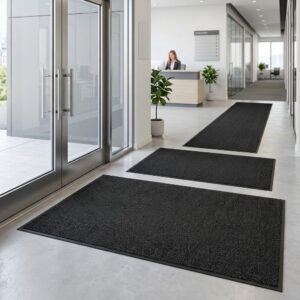
Strategic placement plays a major role in extending mat lifespan. Mats should be placed where they are most effective, such as building entrances, high-traffic walkways, service counters, and transition points between indoor and outdoor spaces.
Using mats that are appropriately sized for each area ensures they capture dirt and moisture efficiently. Mats that are too small may wear out faster due to concentrated foot traffic in a limited space.
It’s also important to select the right mat type for each environment. Slip-resistant, moisture-absorbing, or scraper-style mats are designed for specific conditions and will perform better when used correctly. Proper placement reduces unnecessary strain on mats and improves overall durability.
Rotation and Timely Replacement
Rotating mats is an often-overlooked but highly effective maintenance strategy. In high-traffic areas, mats tend to wear unevenly, especially near entrances or service points.
By rotating mats regularly, wear is distributed more evenly across the surface, helping extend their usable life. This is especially helpful for facilities with multiple identical mats that can be rotated on a scheduled basis.
While rotation helps, mats will eventually reach the end of their lifespan. Knowing when to replace mats is just as important as maintaining them. Mats that are curled, torn, slippery, or heavily worn should be replaced promptly to maintain safety and appearance.
Using a managed Floor Mat program can help ensure worn mats are replaced before they become a liability.
Smart Storage to Prevent Damage
Proper storage is essential when mats are not in use. Mats should always be stored flat and completely dry to prevent warping, cracking, or mold growth.
Avoid rolling mats too tightly or stacking heavy objects on top of them, as this can cause permanent creases and deformation. For seasonal mats, such as winter entrance mats, storage areas should be clean, dry, and well-ventilated.
Taking a few extra minutes to store mats correctly can prevent costly damage and extend their functional lifespan significantly.
Benefits of Professional Floor Mat Programs
While basic maintenance can be handled in-house, many businesses choose professional floor mat services to ensure consistent quality and care. These programs include regular cleaning, inspection, rotation, and replacement as needed.
Professionally maintained Floor Mat programs reduce internal labor, ensure mats meet safety standards, and help businesses maintain a polished appearance year-round. This is especially beneficial for facilities with heavy foot traffic or multiple locations.
A Smarter Way to Protect Your Floors
Following these floor mat maintenance tips helps businesses protect their floors, reduce safety risks, and extend the life of their mats. Regular cleaning, proper placement, routine rotation, and smart storage all work together to keep mats performing at their best.
For businesses looking for a reliable, hassle-free solution, partnering with Maurer’s Textile provides professionally managed mat services that support cleanliness, safety, and long-term cost control.